Professor Emerita, Cornell University

Collaborative Projects In Progress


Chimney of Putli Ghar, Bhopal’s first factory, 1890 (© Nipun Prabhakar, 2023)
Annie Schentag + Nipun Prabhakar + Mary N. Woods
Book manuscript about postindustrial landscapes in India and the US as told through the making, unmaking, and remaking of Bhopal, Buffalo, Mumbai, and New York City.
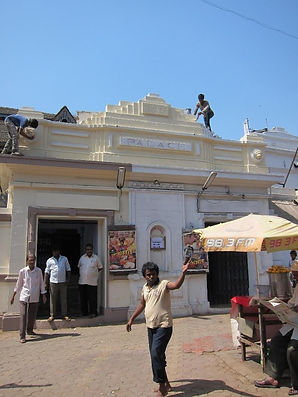
Palace Talkies, Mumbai, early 1930s
(© Mary N. Woods, 2015)
Mary N. Woods
“Saving the Once and Future Legacies of India’s Single-Screen Cinemas” essay
Films have been made in India for Indians since the earliest days of motion pictures. Today the country is one of the largest producers of movies in the world. There has been a national archive to conserve Indian films since 1964. A private foundation and national museum dedicated to preserving cinema and its history opened in the last decade. However, there are few efforts to save India’s remaining single screens. These cinemas, like those around the world, have been shuttered or demolished at an alarming rate since the 1970s. The tangible heritage of India’s diverse modern architectures and intangible heritage of intertwined mores, cultures, and nation-state are disappearing with them. Single screens were once the only places where Indians of different castes, classes, genders, and religions came together under one roof. Ecosystems of sociality and commerce thrived in and around them. Although symbols of family, community, and national pride, they are also sites of conflict and violence over culture, religion, inclusion, and sexuality. What follows is not just a lament for single-screen cinemas but an exploration of their complex pasts, new avatars, and lessons for heritage and reinvention in India and beyond.
Clarence Stein, La Casa, Brentwood, California, 1933-34 (Clarence Stein papers, #3600. Division of Rare and Manuscript Collections, Cornell University Library)
Mary N. Woods
“Building Community in the Dark: Clarence Stein, Hollywood,and Movie Theatres,” essay
Today, Clarence Stein is remembered as an architect and planner of social housing and new towns for the motor age. Little known and unstudied are Stein’s planning and advocacy for movie theatres as community architectures at: Hillside Homes; New Deal greenbelt towns; new town for World War II refinery workers; and Chandigarh’s first master plan. As producer of The City, a documentary about housing, Stein believed in the power of film to educate. These projects drew on exceptional entrée to the film industry through his wife Aline MacMahon (stage and film actress) and brother-in-law Arthur L. Mayer (studio executive and showman). When community efforts to repurpose and reimagine struggling movie theatres are growing here and abroad, Stein’s work bears revisiting as an unexplored dimension of his modernity and modernism. Using his archives and writings, the promise and reality of cinemas as community architectures are recovered and scrutinized here.
Book manuscript about postindustrial landscapes in India and the US as told through the making, unmaking, and remaking of Bhopal, Buffalo, Mumbai, and New York City.
Annie Schentag + Nipun Prabhakar + Mary N. Woods
Avenir Light is a clean and stylish font favored by designers. It's easy on the eyes and a great go-to font for titles, paragraphs & more.

Chimney of Putli Ghar, Bhopal’s first factory, 1890 (© Nipun Prabhakar, 2023)
“Saving the Once and Future Legacies of India’s Single-Screen Cinemas” essay
Mary N. Woods
Films have been made in India for Indians since the earliest days of motion pictures. Today the country is one of the largest producers of movies in the world. There has been a national archive to conserve Indian films since 1964. A private foundation and national museum dedicated to preserving cinema and its history opened in the last decade. However, there are few efforts to save India’s remaining single screens. These cinemas, like those around the world, have been shuttered or demolished at an alarming rate since the 1970s. The tangible heritage of India’s diverse modern architectures and intangible heritage of intertwined mores, cultures, and nation-state are disappearing with them. Single screens were once the only places where Indians of different castes, classes, genders, and religions came together under one roof. Ecosystems of sociality and commerce thrived in and around them. Although symbols of family, community, and national pride, they are also sites of conflict and violence over culture, religion, inclusion, and sexuality. What follows is not just a lament for single-screen cinemas but an exploration of their complex pasts, new avatars, and lessons for heritage and reinvention in India and beyond.

Palace Talkies, Mumbai, early 1930s
(© Mary N. Woods, 2015)
“Building Community in the Dark: Clarence Stein, Hollywood,and Movie Theatres,” essay
Mary N. Woods
Today, Clarence Stein is remembered as an architect and planner of social housing and new towns for the motor age. Little known and unstudied are Stein’s planning and advocacy for movie theatres as community architectures at: Hillside Homes; New Deal greenbelt towns; new town for World War II refinery workers; and Chandigarh’s first master plan. As producer of The City, a documentary about housing, Stein believed in the power of film to educate. These projects drew on exceptional entrée to the film industry through his wife Aline MacMahon (stage and film actress) and brother-in-law Arthur L. Mayer (studio executive and showman). When community efforts to repurpose and reimagine struggling movie theatres are growing here and abroad, Stein’s work bears revisiting as an unexplored dimension of his modernity and modernism. Using his archives and writings, the promise and reality of cinemas as community architectures are recovered and scrutinized here.

Clarence Stein, La Casa, Brentwood, California, 1933-34 (Clarence Stein papers, #3600. Division of Rare and Manuscript Collections, Cornell University Library)
“Mumbai’s Architecture of the Night”
Chirodeep Chaudhuri + Mary N. Woods
“Mumbai’s Architecture of the Night” exhibition and publication about the city’s illuminated spaces and buildings. Photos © Chirodeep Chaudhuri

Photos © Chirodeep Chaudhuri
Coffee and Families in India and the US
Nipun Prabhakar + Mary N. Woods
Ongoing project.

Recent Collaborative Projects
“Women Architects in India: Dreaming through Design,” MARG, September 2020
Namita Dharia + Nipun Prabhakar + Mary N. Woods,

“Covid 19 Architectural Journalism: A Conversation with Peggy Deamer and Mary N. Woods,” Platform, July 27, 2021.
Nipun Prabhakar, Untitled Collage, 2020. New York Times photographs sourced for collage by: George Etheredge; Zack DeZon; and Vincent Tullo.
https://www.platformspace.net/home/covid-19-architectural-journalism-a-conversation

“In Memorium: Kamu Iyer: A Tribute,” Thinkmatter, 2020

“Nazir Hoosein: A Tribute to the Gentleman behind the Liberty Cinema,” Art Deco Mumbai Trust, June 6, 2019
